
Fayette County Criminal Court Records
Criminal court records in Fayette County are maintained by the Fayette County Clerk of Courts. Timothy C. Dye is listed as Clerk of Courts. The office maintains criminal records for the Court of Common Pleas, supports criminal fines, costs, and restitution work, handles summary appeals, and receives local expungement filings. This is the correct office for the court case file once a criminal matter is in Common Pleas.
Fayette County is Pennsylvania's Fourteenth Judicial District. The Court of Common Pleas handles felony and misdemeanor criminal matters, while Magisterial District Courts handle preliminary arraignments, preliminary hearings, traffic citations, summary offenses, and other lower-court proceedings. A person checking only the charges filed after arrest may also need the separate arrest records and court charges page. A full custody question belongs with inmate records, and an active failure-to-appear issue may require a warrant records check.
The Fayette County District Attorney's Office prosecutes criminal cases after police file charges and cases are held for court.
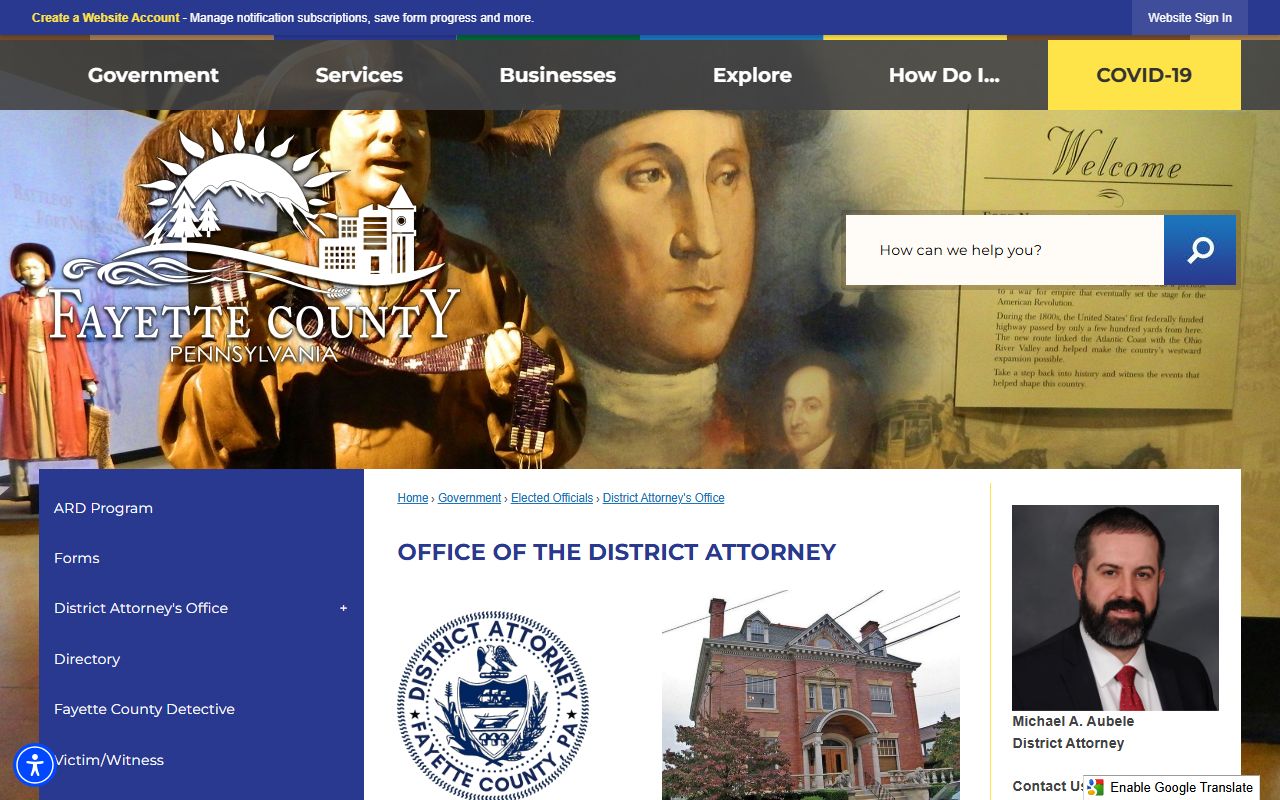
The prosecutor's role helps explain why charges can change as a case moves from lower-court proceedings into the Common Pleas criminal docket.
Search Fayette County Criminal Cases
The main online criminal case channel is Pennsylvania UJS Case Search. It covers public docket sheets for Courts of Common Pleas and Magisterial District Courts. Search options include participant name, docket number, OTN, complaint number, incident number, SID, date filed, and calendar event. Select Fayette County where available.
- Open UJS Case Search and choose participant name, docket number, OTN, complaint number, incident number, or date filed.
- Limit the county to Fayette and check whether the result is Common Pleas or Magisterial District Court.
- Open the docket sheet and confirm the defendant name, docket number, case status, charges, and filing date.
- Read the docket entries for arraignment, motions, hearings, plea, disposition, sentence, warrant activity, and payment entries.
- Contact the Clerk of Courts for certified criminal copies, expungement filings, or questions about criminal fines, costs, and restitution.
UJS warns that public docket sheets should not replace a Pennsylvania State Police criminal-history background check. Court dockets show case activity, but statewide criminal-history information is governed by the Criminal History Record Information Act.
Fayette County Criminal Case Flow
A criminal court record grows as the case moves through each stage. Lower-court events may begin in a Magisterial District Court. If charges move forward, the Common Pleas docket shows later filings, hearings, pleas, orders, disposition, and sentence. The record may also show bench warrants, probation violations, and payment-plan activity.
Case flow: Charges Filed › Arraignment › Pretrial / Motions › Plea or Trial › Disposition › Sentencing
| Stage | What Happens |
|---|---|
| Arraignment | The defendant is formally advised of the charges and the case moves into the court schedule. |
| Pretrial / Motions | Attorneys file requests, discovery issues are addressed, and hearings may be scheduled. |
| Plea or Trial | The case may resolve by plea, trial verdict, dismissal, withdrawal, or another court action. |
| Sentencing | If there is a conviction, the docket may show jail, probation, fines, costs, restitution, or other sentence terms. |
What Criminal Records Show
A Fayette County criminal court record can show docket number, case caption, court, county, filing date, judge, case status, defendant, attorneys, OTN, complaint number, incident number, charges, grading, statute sections, docket entries, hearing dates, plea, disposition, sentence, probation or parole status, costs, fines, restitution, and warrant numbers. Documents may not all be visible through the free docket sheet.
| Field | What It Shows |
|---|---|
| Case Number | The Common Pleas or Magisterial District Court identifier, such as a CP-26-CR docket. |
| Defendant | The person charged in the criminal case. |
| Charges | The alleged offenses, statute sections, grading, and charge status where listed. |
| Plea | The defendant's formal response, such as guilty, not guilty, or nolo contendere. |
| Disposition | The result, including guilty, not guilty, dismissed, withdrawn, or other case outcome. |
| Sentence | The punishment or court order after conviction, including confinement, probation, costs, fines, or restitution. |
The Fayette County Public Defender represents eligible defendants and is part of the criminal court process.
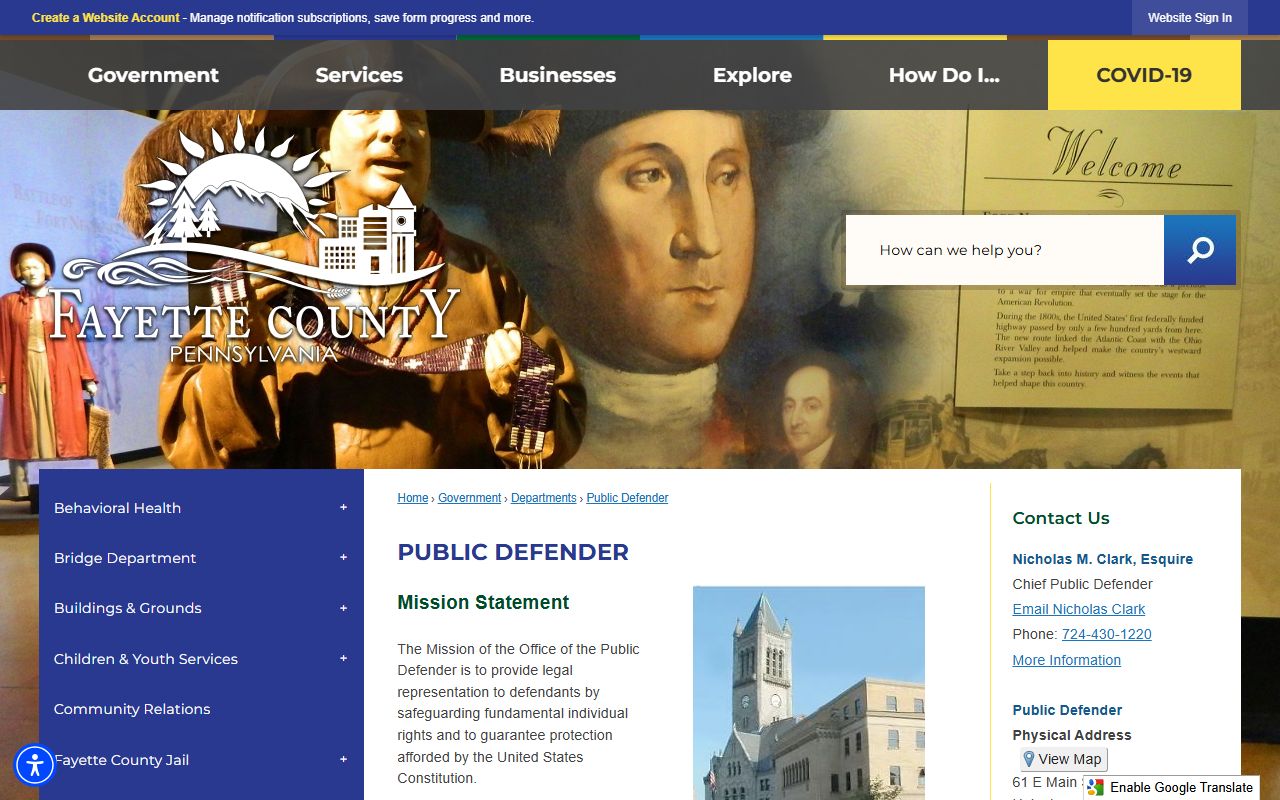
Defense counsel activity may appear in docket entries as appearances, motions, continuance requests, hearings, or plea-related events.
Charges vs. Convictions
A charge is an accusation. A conviction is a court result after a guilty plea, verdict, or other qualifying finding. Fayette County criminal court records can show charges that were amended, reduced, dismissed, withdrawn, or resolved without a conviction. Never treat the existence of a charge as proof of guilt.
| Charge | Conviction | |
|---|---|---|
| Stage | Accusation filed or carried forward. | Result after plea, verdict, or court finding. |
| Burden | Earlier case standard, often tied to probable cause. | Criminal proof standard for guilt. |
| Record Meaning | May remain even if later dismissed or withdrawn. | Supports sentencing and criminal-history consequences. |
Sealed and Expunged Cases
Restricted criminal categories include juvenile matters, sealed cases, expunged records, Clean Slate limited-access records, protected victim or minor details, and personal identifiers. Pennsylvania expungement authority is found in 18 Pa.C.S. § 9122. Limited-access relief can hide qualifying records from public view without making the record the same as fully expunged.
| Sealed / Limited Access | Expunged | |
|---|---|---|
| Visibility | Hidden from public docket access in qualifying circumstances. | Removed or destroyed as allowed by law. |
| Law Enforcement | May remain available to authorized agencies. | Access is more limited and depends on the statute and order. |
| Local Filing | Filing may route through the Clerk of Courts for Common Pleas criminal cases. | Fayette County criminal expungement filings also route through the Clerk of Courts. |
The Pennsylvania expungement statute is a core criminal-record source.
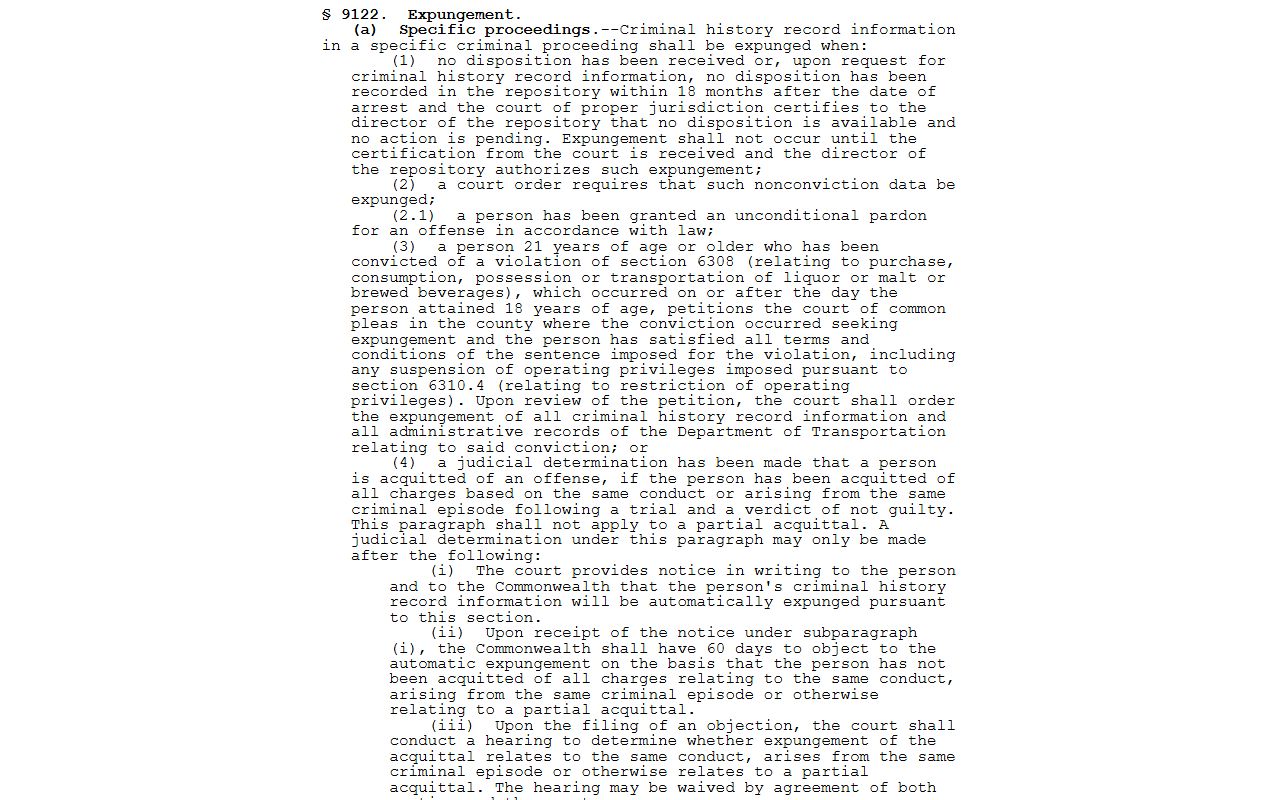
Eligibility is case-specific, so the statute should be paired with the actual Fayette County docket and any court order.
Public Criminal Record Access
Criminal case access starts with UJS and the Clerk of Courts. The Pennsylvania public records page describes public docket access, while the UJS Public Access Policy controls what case information can be displayed. The Right-to-Know Law applies to agency records but is not a substitute for criminal case-file procedures.
Key Statutes:
18 Pa.C.S. Chapter 91 governs criminal history record information.
18 Pa.C.S. § 9122 governs expungement for qualifying criminal records.
VINE is a separate notification tool for custody status and criminal case information.

VINE can help with notification needs, but the official criminal court docket remains with UJS and the Clerk of Courts.
Background Check Limits
Casual docket searches and FCRA-regulated background checks are different. Public docket sheets can be incomplete, delayed, limited by sealing rules, or missing nonpublic details. Employers, landlords, insurers, lenders, and other regulated users should not treat a web docket as a consumer report.
Important: This privately operated site is not a consumer reporting agency and cannot be used for FCRA-regulated decisions.
The Criminal History Record Information Act is the better source for understanding official criminal-history dissemination.
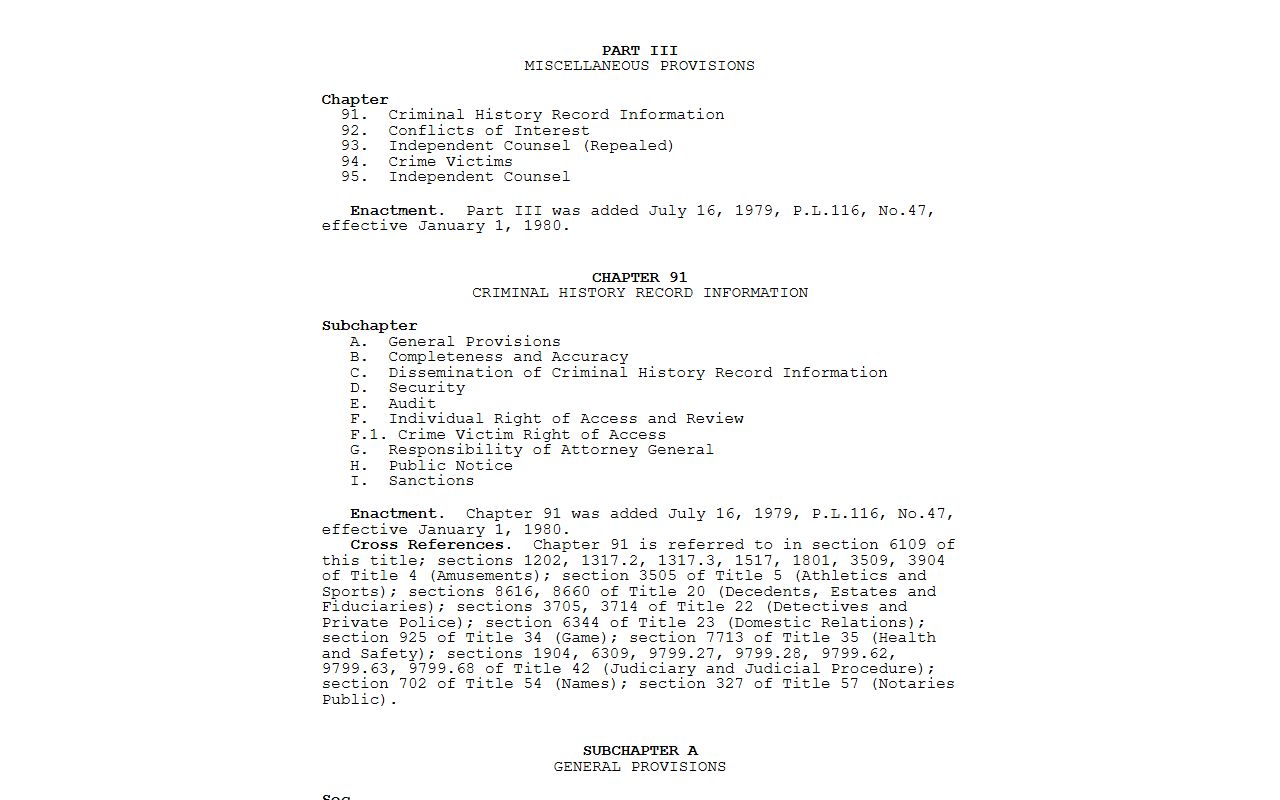
That statewide law explains why a court docket and an official criminal-history record are not the same product.
Verify Fayette County Criminal Records
For a final criminal-case answer, compare the UJS docket with the Fayette County Clerk of Courts file. UJS can show public docket activity, but the Clerk of Courts is the official local custodian for Common Pleas criminal filings, certified dispositions, sentencing records, summary appeal records, and expungement filings. If a case includes recent hearings, bench-warrant activity, payment-plan changes, or a pending sealing request, call the office before relying on the online docket alone.