
How to Search Fayette County Court Records
The main online starting point is the Pennsylvania Unified Judicial System Web Portal at ujsportal.pacourts.us/casesearch. It provides public docket access for Courts of Common Pleas, Magisterial District Courts, and appellate courts when a case is eligible for public display. Fayette County Common Pleas cases, criminal dockets, civil filings, and many traffic matters can be searched there before contacting a local office for copies.
The UJS Case Search portal is the statewide entry point for many Fayette County public docket searches.
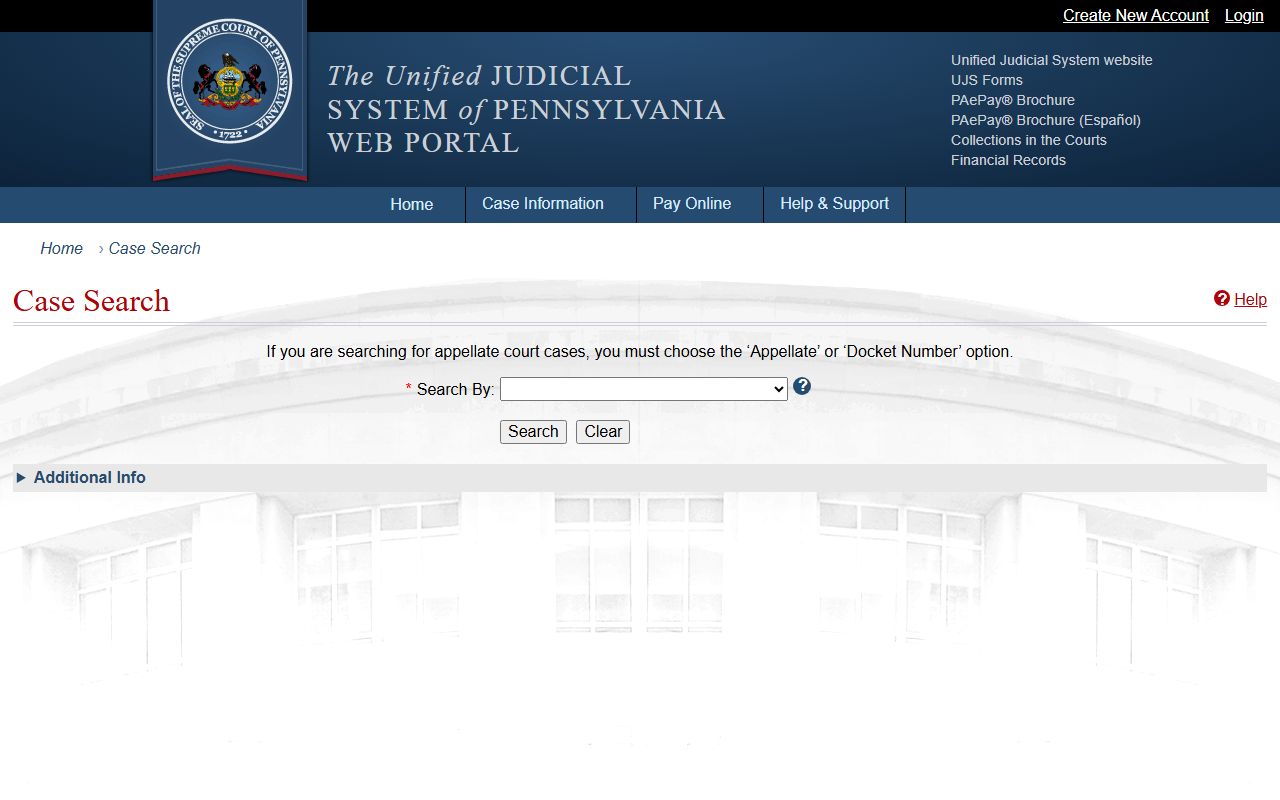
Use the portal for docket-level research, then contact the county office that keeps the official file when a certified copy is needed.
Before starting, gather the party name, case number, filing date range, citation number, or docket number. Criminal and traffic records often use docket prefixes and case identifiers, while civil and family matters may be easier to locate by party name and filing year. Certified copies still come from the office that keeps the official file.
- Open the UJS case search portal and choose the appropriate court level or docket search option.
- Enter a participant name, organization name, docket number, citation number, or date range.
- Narrow results by Fayette County, court type, case category, and filing period when the portal offers those filters.
- Open the docket sheet and review parties, docket entries, charges, events, disposition, and scheduled hearings.
- Contact the Prothonotary, Clerk of Courts, or Register of Wills/Clerk of Orphans' Court when a certified copy or nonpublic file review is needed.
The Fayette County Judicial System
Fayette County belongs to Pennsylvania's Court of Common Pleas system and is served by the Court of Common Pleas of Fayette County, 14th Judicial District. That trial court handles major civil cases, felony criminal cases, family matters, divorce, custody, protection-from-abuse filings, and appeals from magisterial district courts. Magisterial District Courts handle many preliminary criminal proceedings, traffic citations, landlord-tenant matters, and smaller civil claims.
The Pennsylvania court hierarchy overview explains how trial and appellate courts fit together statewide.
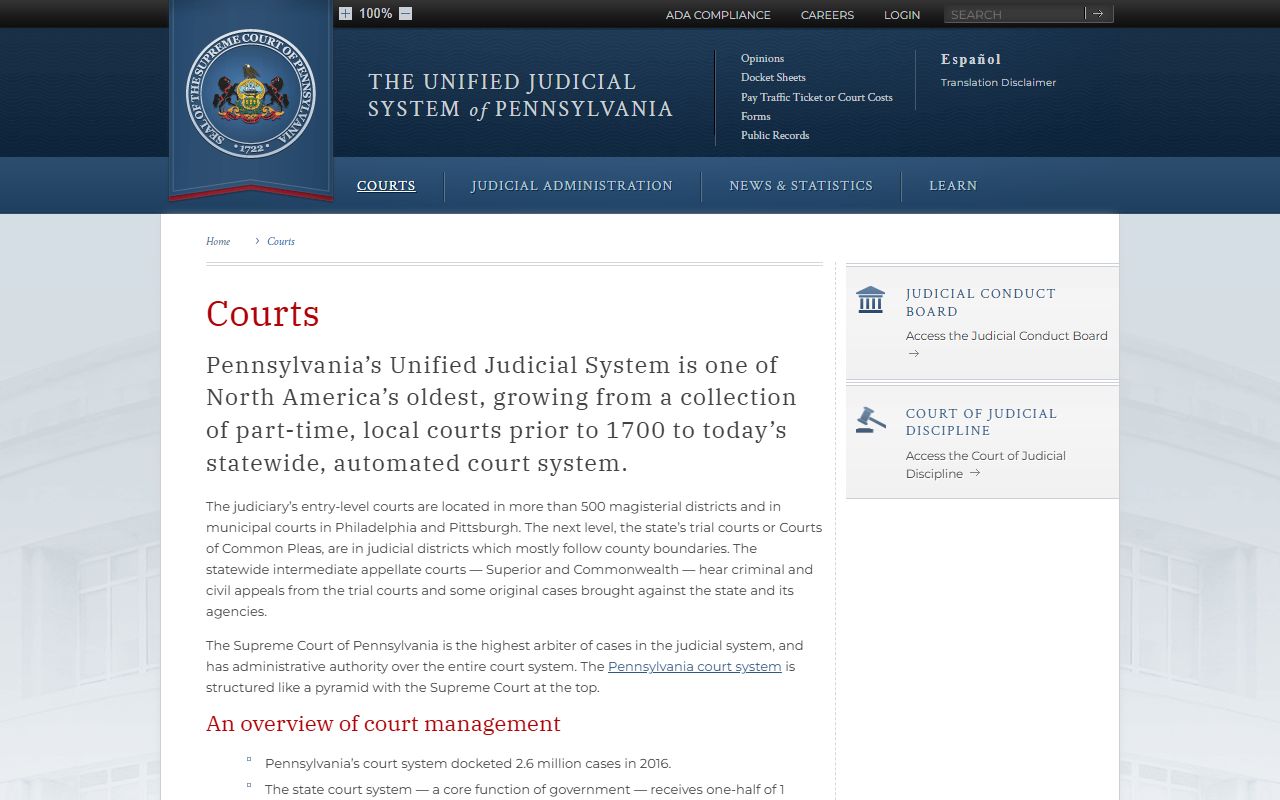
That hierarchy matters because a local Fayette County case may begin in a Magisterial District Court, move to Common Pleas, and later appear in an appellate docket.
The record custodian depends on the division. The Prothonotary keeps civil, family, and divorce filings. The Clerk of Courts keeps criminal court records. The Register of Wills and Clerk of Orphans' Court handles estates, wills, marriage licenses, and Orphans' Court matters. Court Administration supports scheduling and judicial operations for the Court of Common Pleas.
Case flow: Magisterial District Court › Court of Common Pleas › Superior Court or Commonwealth Court › Pennsylvania Supreme Court
| Court | Jurisdiction | Case Types |
|---|---|---|
| Court of Common Pleas | Countywide trial court | Civil, criminal, family, divorce, custody, appeals, and Orphans' Court matters |
| Magisterial District Courts | Local lower courts within Fayette County | Traffic citations, preliminary arraignments, preliminary hearings, landlord-tenant, and small civil claims |
| Pennsylvania appellate courts | Statewide review courts | Appeals from final orders and selected agency or governmental matters |
Fayette County Courthouses
Most Fayette County court records start at the courthouse complex in Uniontown. The same address houses the Court of Common Pleas, Prothonotary, Clerk of Courts, Register of Wills, Clerk of Orphans' Court, Sheriff, and other county offices, but each office has a separate records role.
The county's Court of Common Pleas page identifies the main local trial court source for Fayette County Court records.
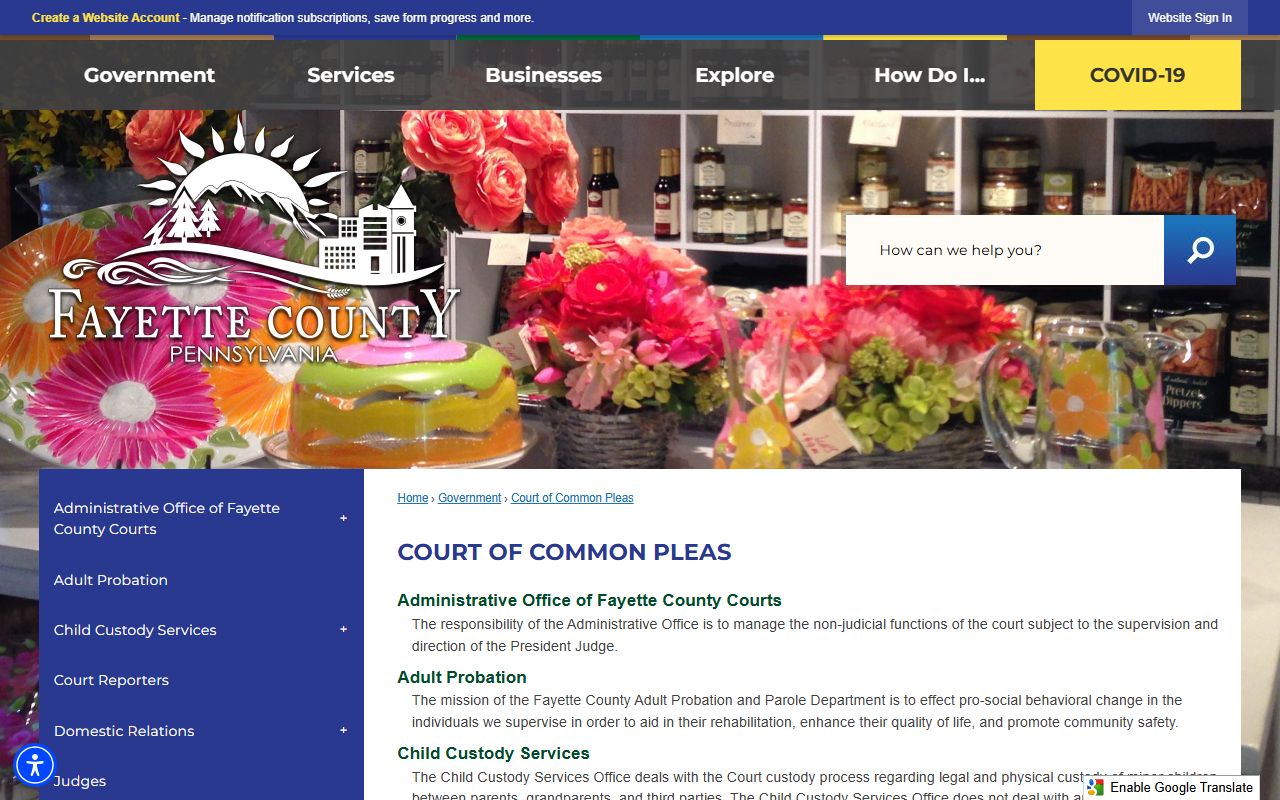
The courthouse contact is useful for court-location questions, but copy requests still need to go to the office that keeps the specific record type.
Types of Court Records Available in Fayette County
Fayette County court records include docket sheets, pleadings, orders, judgments, criminal informations, sentencing entries, civil complaints, family filings, divorce decrees, estate papers, marriage licenses, and traffic citations. The public version of a docket may show a case path without displaying every document image.
The Fayette County Prothonotary page is the local source for civil, family, divorce, lien, and judgment records.
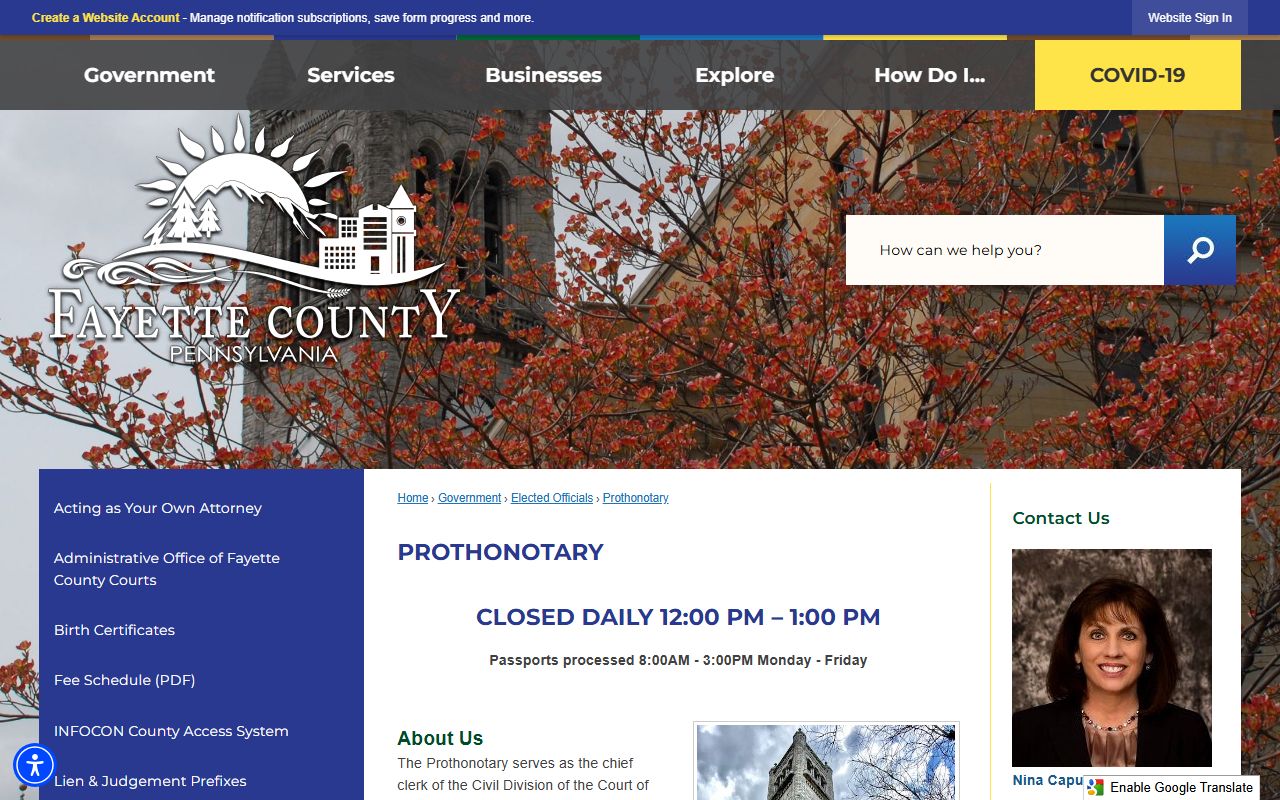
Those records should not be confused with criminal files, which are maintained by a different courthouse office.
The Court of Common Pleas produces most trial-level case records. Magisterial District Courts create traffic, landlord-tenant, preliminary criminal, and smaller civil records. The Orphans' Court and Register of Wills create probate and estate records, while jail and warrant information is maintained outside the court file by the Sheriff's Office and jail administration.
The Clerk of Courts page identifies the criminal records office for Fayette County Court of Common Pleas cases.
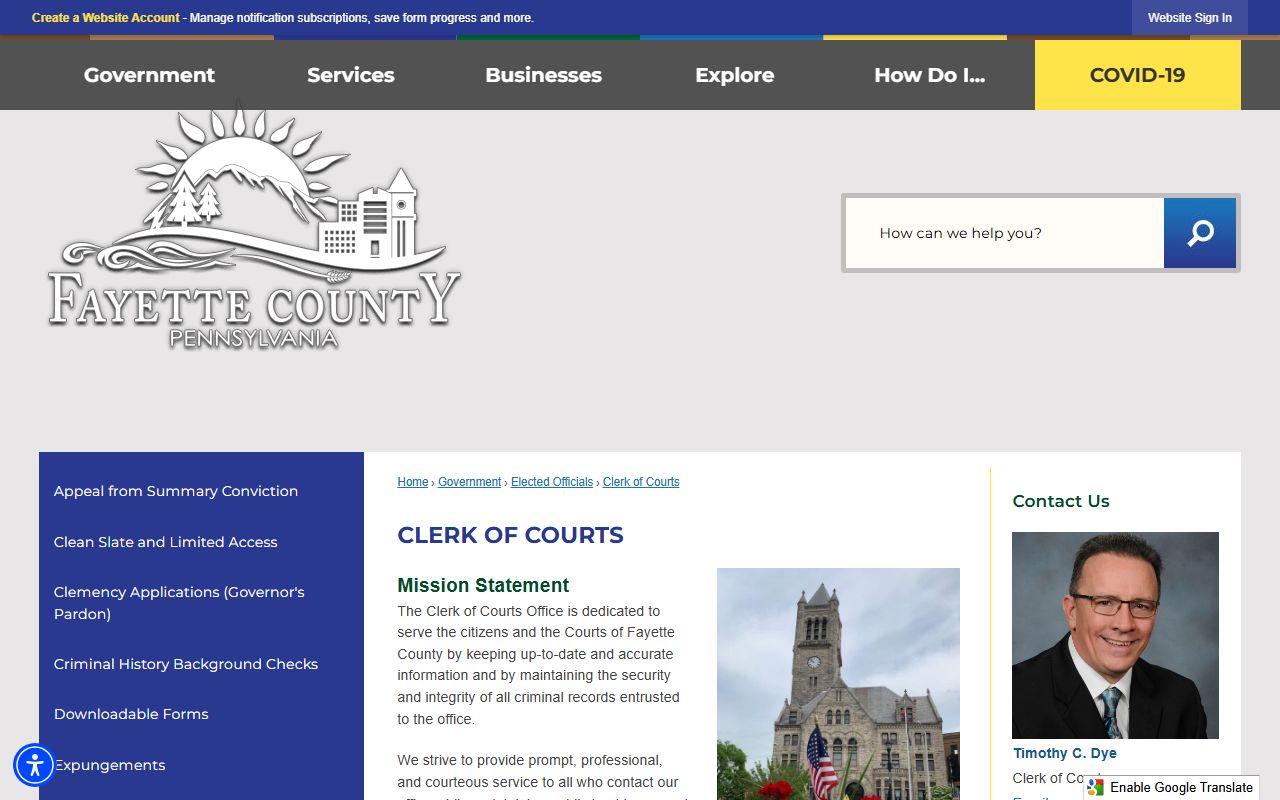
Use that office for criminal docket copy questions, summary appeals, fines, costs, restitution, and criminal expungement filings.
- Criminal records - charges, docket entries, pleas, court events, disposition, sentencing, and related orders kept by the Clerk of Courts.
- Civil records - complaints, judgments, liens, praecipes, motions, and orders maintained by the Prothonotary.
- Family and divorce records - divorce pleadings, decrees, custody filings, and protection matters handled through the civil/family side of the court.
- Probate records - wills, estate filings, inventories, accounts, marriage licenses, and Orphans' Court papers.
- Traffic records - citations, payments, pleas, dispositions, and driver-related consequences tracked through court and PennDOT systems.
What Fayette County Court Records Show
A Fayette County court record usually identifies the case, the court, the parties, the attorneys, the filing date, the assigned division, and the case status. Docket entries show the sequence of filings and court actions. Criminal and traffic files add charges, statute references, pleas, dispositions, fines, sentence terms, and sometimes bond or warrant entries.
| Field | What It Shows |
|---|---|
| Case Number | The docket identifier used by the court and clerk to locate the file. |
| Filing Date | The date the complaint, petition, criminal filing, citation, or estate matter entered the court system. |
| Parties | Names of plaintiffs, defendants, petitioners, respondents, decedents, or defendants depending on case type. |
| Charges / Cause | The criminal statutes, traffic violations, civil claim type, family filing, or probate issue in dispute. |
| Disposition | The outcome shown on the docket, such as judgment, dismissal, guilty plea, sentence, transfer, or closed status. |
| Sentence / Judgment | The court's final penalty, money judgment, custody order, decree, or other enforceable result. |
Public Access Laws for Fayette County Court Records
Pennsylvania separates court-record access from many executive-agency records. The Pennsylvania Right-to-Know Law covers many county records, but court case access is also governed by judiciary policies, docket-publication rules, sealing orders, and statutes that protect certain categories. A record being filed in Fayette County does not automatically mean every page is available online.
The Pennsylvania judiciary's public records page explains statewide access resources for court records and data.
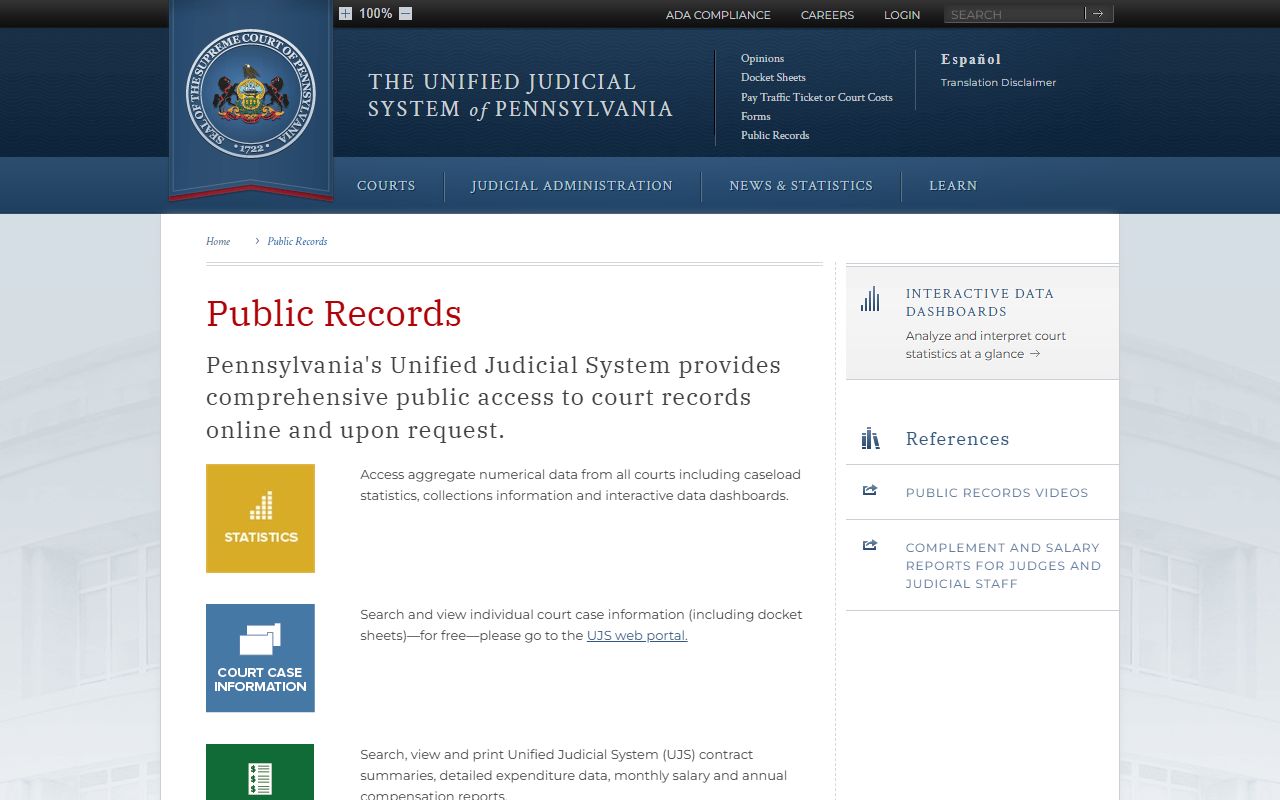
That statewide guidance supports local Fayette County searches by identifying which court materials are handled through judiciary systems.
Key Statutes:
Pennsylvania Right-to-Know Law - sets public-record request rules for many state and local agency records.
Pennsylvania Judiciary Public Records Policies - explains access rules for court records and judiciary records.
Criminal History Record Information Act - governs dissemination and treatment of criminal history record information.
Records That Are Restricted or Confidential
Restricted Fayette County records may include juvenile matters, sealed criminal records, expunged cases, adoption materials, certain mental health proceedings, confidential victim information, some family-court filings, and documents sealed by a judge. Public dockets may still show limited case activity while hiding sensitive documents.
To seek access to a sealed or restricted record, the requester generally must file with the court that controls the file and explain the legal basis for access. Clerk staff can identify filing procedures and fees, but only a judge can modify a sealing order or grant access to a confidential case file.
Specialty Courts in Fayette County
Fayette County's court system includes specialty court programming documented by the county, including problem-solving court options designed to address treatment, supervision, and compliance needs in appropriate cases. These programs can affect docket events, review hearings, sanctions, incentives, and completion outcomes. Public docket entries may show hearings or orders tied to a specialty court, while treatment details and evaluations may be restricted.
The county Court Administration page is a local source for court operations and administrative contacts.
Court Administration can help identify scheduling and program context, but record copies still come from the responsible filing office.
Fayette County Sheriff and Jail
The Fayette County Sheriff's Office operates from the courthouse and is an important access point for civil process, sheriff services, and warrant-related information. The Fayette County Jail is located at 254 McClellandtown Road and can be reached at 724-430-1222 for custody-related questions. The sheriff also publishes mobile-app access for some public-safety information.
Custody status is separate from the court docket. Use Fayette County inmate records for jail roster and inmate-contact details, and use warrant records for bench warrant and sheriff-related access channels.
Marriage, Divorce, and Orphans' Court
Marriage licenses, wills, estates, and Orphans' Court matters are handled through the Register of Wills and Clerk of Orphans' Court. Divorce records are court filings handled through the civil side of the Court of Common Pleas and the Prothonotary. See marriage and divorce records and probate records for the request paths and fees.
The Register of Wills page is the county source for marriage, estate, and Orphans' Court record access.
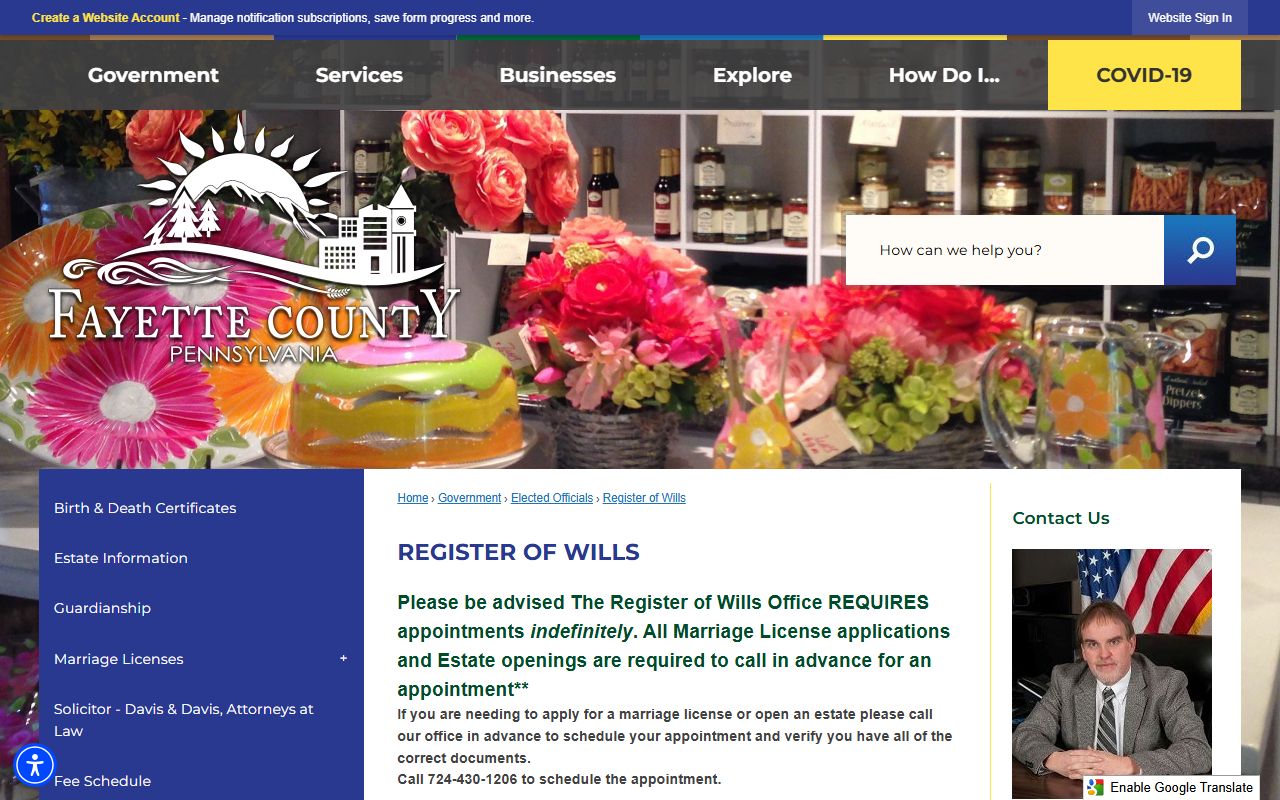
That office is separate from the Prothonotary and Clerk of Courts, which is why marriage and probate requests follow their own path.
- Testator
- A person who made a will.
- Executor
- The person named to administer an estate under a will.
- Administrator
- The person appointed to handle an estate when there is no qualifying executor.
Fayette County Court Records Fees
Fees vary by record type and office. The Prothonotary lists copy and certification charges for civil and family files, while the Clerk of Courts handles criminal record copies and filings. Always confirm the current fee before mailing a request because county fee schedules can change.
| Item | Amount |
|---|---|
| Plain copy per page | $0.25 |
| Certified copy | $14.00 certification charge |
| Divorce filing | $134.50 listed Prothonotary fee |
| Payment note | No personal checks accepted by the Prothonotary |
How to Interpret Fayette County Court Records
Read a Fayette County docket in sequence. A charge is an allegation, not a conviction. A disposition tells what happened to that charge or claim. Docket entries such as filed, ordered, continued, satisfied, dismissed, sentenced, or transferred describe events in the case, while the final judgment or sentence controls the legal outcome. For criminal matters, review each charge separately because one case can include dismissed, amended, and convicted counts.
Accuracy and Record Limitations
Online docket information can lag behind clerk processing, hearing results, or sealed-record updates. The official record remains with the office that maintains the file, not with a third-party search tool. If a docket appears incomplete or inaccurate, contact the Prothonotary for civil and family records, the Clerk of Courts for criminal records, or the Register of Wills/Clerk of Orphans' Court for estate and probate records.
For non-court administrative records, Fayette County provides a public records information page outside the case-file process.
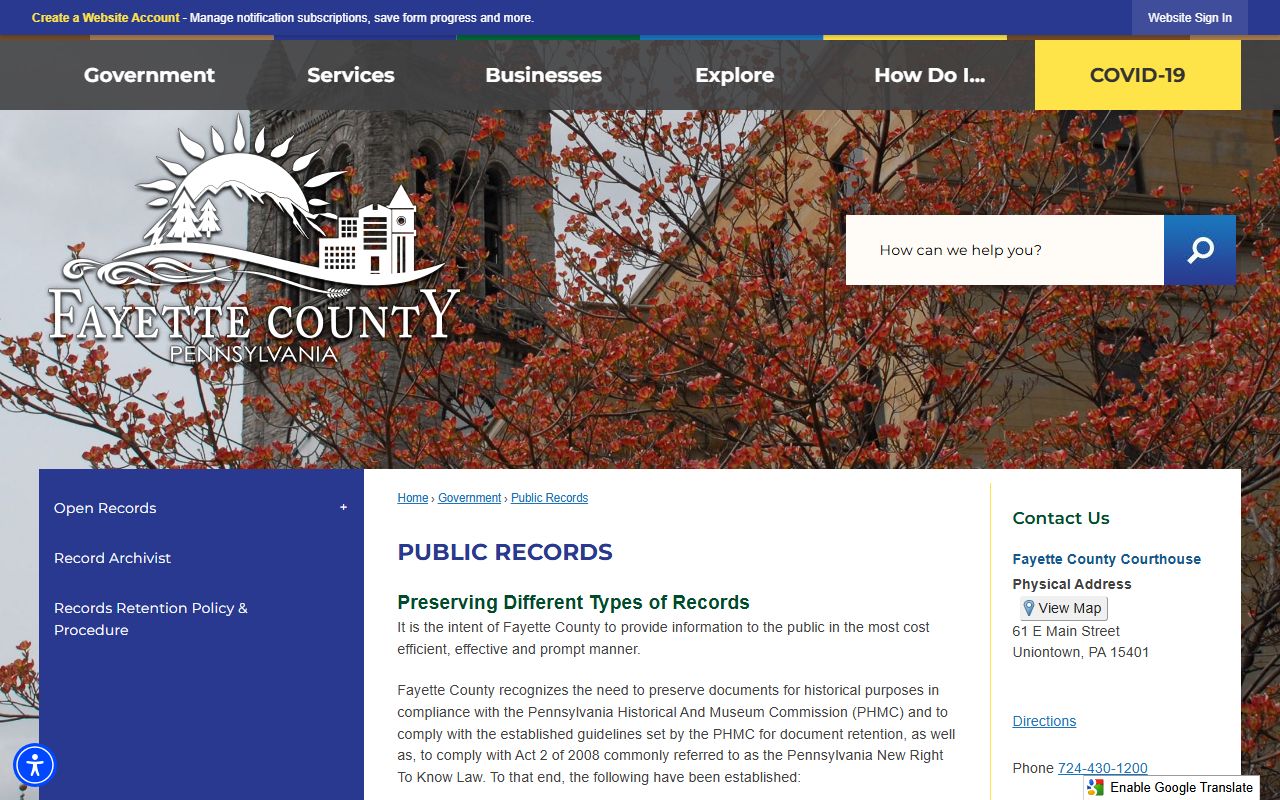
This distinction helps separate courthouse case files from county administrative records that may use Right-to-Know procedures.
Note: Confirm fees, deadlines, hearing status, and copy requirements with the originating Fayette County office before relying on an online record.
History of Fayette County Courts
Fayette County's court records reflect a long county-seat history centered in Uniontown and the courthouse offices around East Main Street. Older records may require direct office contact rather than online searching, especially for archived civil files, estates, marriage records, or older criminal dockets that predate modern statewide indexing.
Frequently Asked Questions
Where do I search Fayette County Court cases online?
Start with the Pennsylvania UJS case search portal for public dockets from the Court of Common Pleas and Magisterial District Courts. Use Fayette County as a filter when available. If you need a certified document, contact the correct county office after finding the docket.
Which Fayette County office handles divorce records?
Divorce cases are Court of Common Pleas civil/family matters and are handled through the Prothonotary. Marriage licenses and estate records are handled by the Register of Wills and Clerk of Orphans' Court, so the correct office depends on the record type.
Are Fayette County criminal charges the same as convictions?
No. A charge is an accusation filed in court. A conviction requires a guilty plea, verdict, or other qualifying disposition. Review every charge line and disposition before treating a criminal docket as a conviction record.